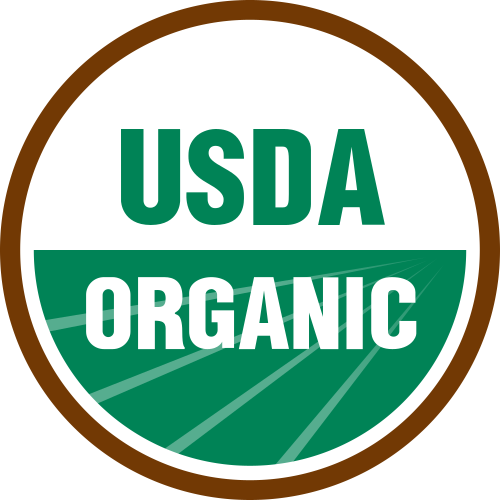
USDA Organic
The Official Standard
Produced through approved methods that integrate cultural, biological, and mechanical practices that foster cycling of resources, promote ecological balance, and conserve biodiversity.
Synthetic fertilizers, sewage sludge, irradiation, and genetic engineering may not be used.
What This Really Means
The USDA Organic seal is one of the most rigorously regulated labels in the world. Unlike "natural" or "clean," which have no legal definitions in the cosmetic industry, "USDA Organic" is a federal standard overseen by the National Organic Program (NOP). For a product to display this seal, it must meet the exact same standards as organic food. This means that at least 95% of the ingredients (by weight, excluding water and salt) must be certified organic. The remaining 5% can only come from a strict list of allowed non-organic substances. Why does this matter for skincare? Because strictly "organic" farming prohibits the use of toxic persistent pesticides, synthetic nitrogen fertilizers, and sewage sludge. By choosing USDA Organic skincare, you are ensuring that these concentrated chemicals are not present in the oils and botanical extracts you apply to your skin. Furthermore, USDA Organic prohibits the use of GMOs (Genetically Modified Organisms) entirely. The certification process is not a one-time check. It involves an annual review of the farm's organic system plan and onsite inspections of fields, facilities, and records. This creates a traceable chain of custody from the soil to the finished bottle, ensuring that "organic" isn't just a marketing buzzword—it's a verifiable promise.
Checklist for Verification
- ✓ Must contain at least 95% organically produced ingredients.
- ✓ No synthetic fertilizers, sewage sludge, or irradiation.
- ✓ No genetic engineering (GMOs) allowed.
- ✓ Annual facility inspections by a USDA-accredited agent.